
Fayette FACTOR Gets Money to Help COVID-Affected Families
Fayette FACTOR received a grant for COVID-19 response focused on education, food insecurity, housing, and mental health.
Fayette FACTOR received a grant for COVID-19 response focused on education, food insecurity, housing, and mental health.

Georgia has the highest percentage in the nation of families with children concerned about losing their housing in the next month due to income loss from the pandemic, according to a new report.

Macie McCannon, a 16-year-old mother, is strengthening her parenting skills and knowledge through the Elbert County home visitation program.
2020 brought an increased need for Cobb Collaborative’s “Mind Your Mind” mental health campaign.
A team of UGA faculty aims to provide couples with relationship skills and financial guidance with the help of a $6.2 million grant from the U.S. Department of Health and Human Services.

The assistant CFO manages all GAFCP financial operations in compliance with GaFCP policies, written protocols, and funder requirements.
The Griffin Elks Lodge #1207, through their work with the Elks National Foundation, made a $3,500 donation to the Butts County Life Enrichment Team. L.E.T. is part of the Georgia Family Connection Collaborative working together to build a better Georgia.
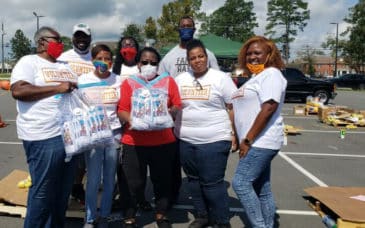
Montgomery County Commissioner Brandon Braddy is looking to Census 2020 as a way to improve conditions for struggling neighbors. He turned to Kristy Bennett, coordinator for Tri-County Family Connection, to lead the efforts.

Business owners, volunteers, and school officials in Lumpkin County found ways to help the community while facing their own COVID-related challenges.
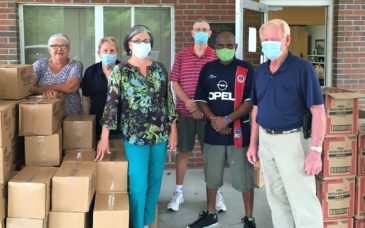
Healthcare Georgia Foundation’s Catalyst interviewed Zoe Myers and Jennifer Lovett of Cook County Family Connection to find out how the Collaborative is doing in the midst of the COVID-19 pandemic.
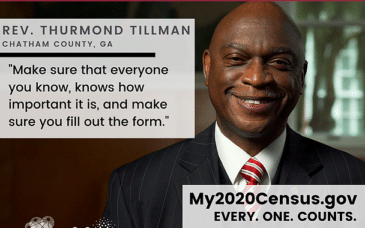
As of today, 27% of Georgians have still not responded and only 38 of Georgia’s counties are meeting their 2010 rate, which places Georgia 49th in the nation in total response. More than ever, we can see in the wake of this pandemic why the census matters.
When members of a community vote in elections, they increase civic health. More voting and more information about voting equals healthier, more supportive communities. And that means a better life for you and your family.