
Physical Activity in Early Childhood Education Vital for Long-Term Health and Wellness
Print This Post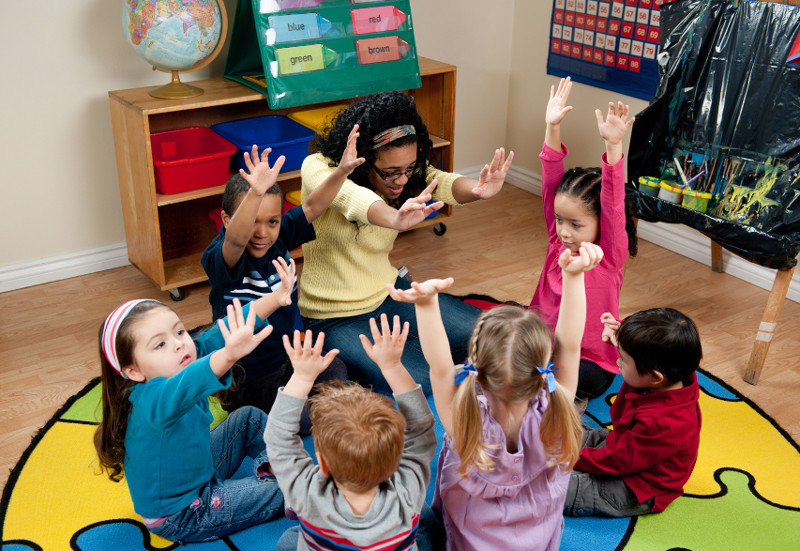
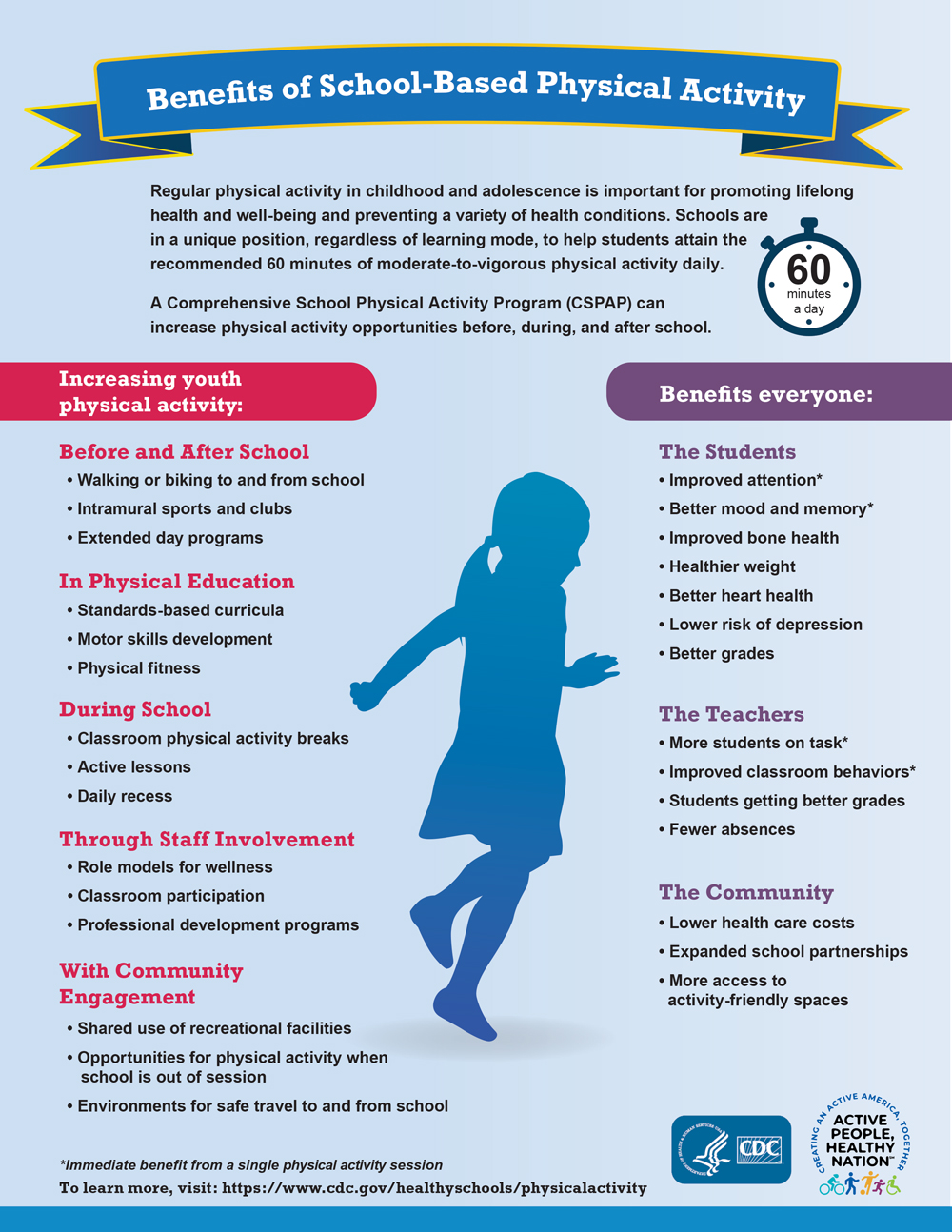
The Centers for Disease Control and Prevention (CDC) recommends that children ages 3 to 5 need to be physically active throughout the day, engaging in aerobic, muscle building, and bone strengthening activities. However, according to the CDC, only 24% of children get the recommended daily amount of physical activity. This matters because adequate physical activity plays a key role in children’s cognitive, social-emotional, physical development—and lays the foundation for long-term health and well-being.
Including physical activity in early childhood education has multiple benefits not only for children, but for families, teachers, and communities as well, because engaging children in physical activity can help with classroom management and reduce stress and well-being for teachers and families.
With increasing numbers of children in out-of-home care, it’s vital that early childhood education settings include opportunities for physical activity and physical activity education, however, early childhood education has shifted toward academic programming, reducing physical activity. Research has demonstrated that reducing physical activity in early childhood has negative impacts on whole child development.
Physical activity throughout the day has been found to have a positive impact on young children’s academic performance, brain development, executive function, school readiness physical development (muscular fitness), heart and lung health, bone strength, and cardiometabolic health. Studies have found that when children are physically active during early childhood, they are more likely to establish habits that continue that into adulthood.
Physical development
Physical activity plays a crucial role in physical development, particularly for children birth to 5. During this time, children experience significant physical growth and gross and small motor development that physical activity plays a critical role in helping to develop and master. It helps build large and fine muscles, strengthens bones and sets the foundation for ensuring bone strength and endurance.
Through structured and organized physical activity, children develop motor skills and develop mastery over fine and gross motor skills, and hand eye coordination. Structured and organized physical activity with specific rules and methods—guided by a teacher—can help children work toward mastering these skills.
Long-term health outcomes
Ensuring regular physical activity during young ages can help improve bone density and muscle development. It also reduces the risk of obesity and Type 2 diabetes and helps to maintain normal blood sugar levels. Physical activity beginning in early childhood is related to overall physical fitness, mental health, and reduction in chronic disease.
Cognitive development
Structured physical activity plays a critical role in helping young children with spatial awareness, executive function, language development, and cognitive growth. It can help young children develop literacy connection because language and words can be taught in context with activities like movement games and songs.
Structural physical activity supports brain development by enhancing blood flow and stimulating neurons. These connections are critical for creating and maintaining neural connections. Physical activity improves cognitive performance and larger brain structures and supports executive function skills like self-control and cognitive flexibility.
Social-emotional development
Physical activity throughout the day has been shown to reduce depression risk and improve attention and memory capacity in young children. Active free play time provides opportunities for children to develop bonds and relationships with peers and teachers, and provides opportunities to build skills around negotiating, conflict resolution, and shared activities. Through physical play, children build communication skills, learn how to express their needs, and develop leadership skills, built through structured and unstructured physical activity time. Children also are generally able to focus more and are less fidgety when physical activity is integrated throughout the day.
Recommendations by Age
It’s critical to integrate physical activity throughout the day in a variety of ways. Teachers should include fun physical activity for kids and build upon things that children enjoy. Early childhood education settings are in a unique position to help set the foundation for regular physical activity in young children and often are the one safe space that children have for physical activity when they don’t have the time or space at home. Most early childhood educators, however, lack adequate training and resources to implement structured physical activity sessions, with 70% not fully implementing vigorous activities as planned. Current data indicates that most preschoolers don’t get the recommended amount of physical activity.
Multiple researchers discussed recommended early childhood daily physical activity guidelines from the World Health Organization, the National Association for Sport and Physical Education, and Centers for Disease Control:
- Infants need physical activity several times throughout the day. This should focus on floor-based play, at least 30 minutes daily of tummy time play, and safe spaces for free open movement not limited to infant play equipment.
- Toddlers need two to three periods of outdoor play time. They also need two or more structured activities that promote movement and gross motor skills—movement songs and games. Daily physical activity should include 60 to 90 minutes of moderate to vigorous activity. Sedentary periods should be limited to an hour at a time.
- Preschoolers need physical activity throughout the day in different lengths of time. They should have at least 180 minutes of daily physical activity with at least two to three outdoor periods each day and two or more periods of structured play activities focused on gross motor skills.
- Six-year-olds need at least 60 minutes of both structured and unstructured physical activity throughout the day.
Incorporating Physical Activity in Classrooms
Physical activity can also help with classroom management. When young children have adequate physical activity time scheduled throughout the day, it can help them use their energy and increase their ability to focus.
There are multiple ways to engage young children in physical activity in developmentally appropriate ways that help them build necessary skills. These include both structured—organized, rule based, planned activities—and unstructured—free play, open activity.
Teachers should include space and time for both indoor and outdoor physical activity. Taking a multi-strategy approach that includes free-time physical activity, and a wide range of structured physical activity time was found to be the most successful in both implementing physical activity into classrooms and in engaging children in daily physical activity daily.
By incorporating physical activity in the classroom, in physical education instruction, and in organized sports and free activity time, early childhood education settings can help ensure that young children get the physical activity levels needed throughout the day and build on key benefits. Integrating physical activity in classrooms reduces fidgeting, and promotes motivation to learn, helping children stay on task and focus when used as part of the regular day and not as a punishment or reward.
Adults modeling physical activity also increases the likelihood of young children being physically active. When teachers engage in play and physical activity with children, they’re more likely to participate. This includes both in free time play as well as organized structured physical activity. It’s critical that care givers engage in behaviors as well as give direction to children on how to engage in the activities. Teachers can role play physical activity by participating in play time, leading structured activities, and generally demonstrating regular activity.
Fundamental movement games and practice were found to be the most effective at increasing physical activity in early childhood classrooms and teachers reported that this was the best way for them to include activity throughout the day. However, across multiple studies, teachers reported that time constraints and requirements presented the greatest challenge. Teachers also reported greater levels of comfort with traditional teaching methods over physical activity.
Recommendations for Communities
Communities can support children, teachers, and early childhood settings in ensuring enough physical activity for young children by:
- supporting training opportunities and professional development opportunities for teachers working with young children;
- holding community events targeted toward supporting physical activity for young children and opportunities for adults and children to engage in activities together;
- advocating for systemic changes in early education policies and requirements to successfully implement physical activity changes in early childhood education;
- supporting research to address impacts of physical activity on areas like hyperactivity, working memory, and with special populations;
- supporting data collection and monitoring efforts toward progress on public health goals impacted by early childhood physical activity;
- finding ways to support families’ regular physical activity through community events;
- helping ensure safe public places for children to play in the community and in early education settings; and
- ensuring early education settings have the infrastructure and supplies needed to support indoor and outdoor physical activity.
Read Importance of Physical Activity in Early Childhood Education—Research Summary 16, Fall 2025, prepared by the Georgia Family Connection Partnership Evaluation, Results, and Accountability Team.
Contact:
Bill Valladares
GaFCP Communications Director
404-739-0043
william@gafcp.org
Reg Griffin
DECAL Communications Director
404-656-0239
reg.griffin@decal.ga.gov
Follow us on Twitter: @gafcpnews
Connect with us on Facebook.
Bright from the Start: Georgia Department of Early Care and Learning (DECAL) is responsible for meeting the child care and early education needs of Georgia’s children and their families. It administers the nationally recognized Georgia’s Pre-K Program, licenses child care centers and home-based child care, administers Georgia’s Childcare and Parent Services (CAPS) program, federal nutrition programs, and manages Quality Rated, Georgia’s community powered child care rating system.
The department also houses the Head Start State Collaboration Office, distributes federal funding to enhance the quality and availability of child care, and collaborates with Georgia child care resource and referral agencies and organizations throughout the state to enhance early care and education.