Pandemic Pivot Leads to Stronger Engagement in Burke County
Print This Post
When the COVID-19 pandemic overwhelmed communities, local Georgia Family Connection Collaboratives quickly pivoted—often setting aside planned activities to meet urgent needs.
Burke County Family Connection faced high-priority concerns related to food insecurity, access to health care, reliable information, and mental health support.
Families in Burke County experienced increased economic hardship, while service delivery was disrupted by limited in-person engagement and barriers to virtual access. The Collaborative worked with partners to distribute food, crank radios, tarps, and emergency kits.
At the same time, opportunities for deeper partner engagement in Burke became more difficult to sustain. The disruption highlighted gaps in communication and coordination, reinforcing how critical strong, aligned partnerships are—especially in times of crisis.
After its Annual Data Review, Burke County Family Connection partners wanted to better understand the Partner Engagement report. The Collaborative teamed up with GaFCP’s Evaluation and Results Accountability Team to survey 50 partners and deepen its understanding of engagement.
The results are shaping a more intentional approach to alignment and collaboration. “We learned from the survey how Collaborative partners view their roles and how we can best communicate with them,” said Burke County Family Connection Coordinator Teresa Carter. “This process has created new opportunities to deepen relationships and more strategically align partners through sector-based strategy teams.”

One key area of focus is the development of a core violence prevention strategy team. This group brings together representatives from the Sexual Assault Response Center, Sheriff’s Office, Department of Juvenile Justice, and Green Dot facilitators to create a coordinated, community-wide approach to prevention
By aligning advocacy, law enforcement, and education partners, we’re strengthening communication, identifying trends, and ensuring prevention and response efforts are unified and effective,” said Carter. “As a result, we host monthly brunches, inviting community members to learn how they can stand up to violence and help protect vulnerable victims.”
The Collaborative has demonstrated how intentional connections can develop into lasting partnerships. For instance, GaFCP Associate Communications Director Krystin Dean introduced Burke County Family Connection in 2021 to the Linus Project, a volunteer organization that provides handmade blankets to children who are seriously ill, traumatized, or in need.
What began as a few blankets at a local school has grown into a sustained partnership. The Collaborative and partners delivered more than 50 blankets to schools, Head Start, and Early Head Start programs during one week in March. School counselors said the blankets provide comfort and emotional support to children.
Central to this progress is the Collaborative’s use of the annual Self-Assessment process as a tool for reflection and growth. It provides a structured opportunity to reflect, identify gaps, and better understand partner experiences,” said Carter. “Through this process, Collaborative members recognized a need to improve clarity around partner roles and increase opportunities for meaningful engagement.”
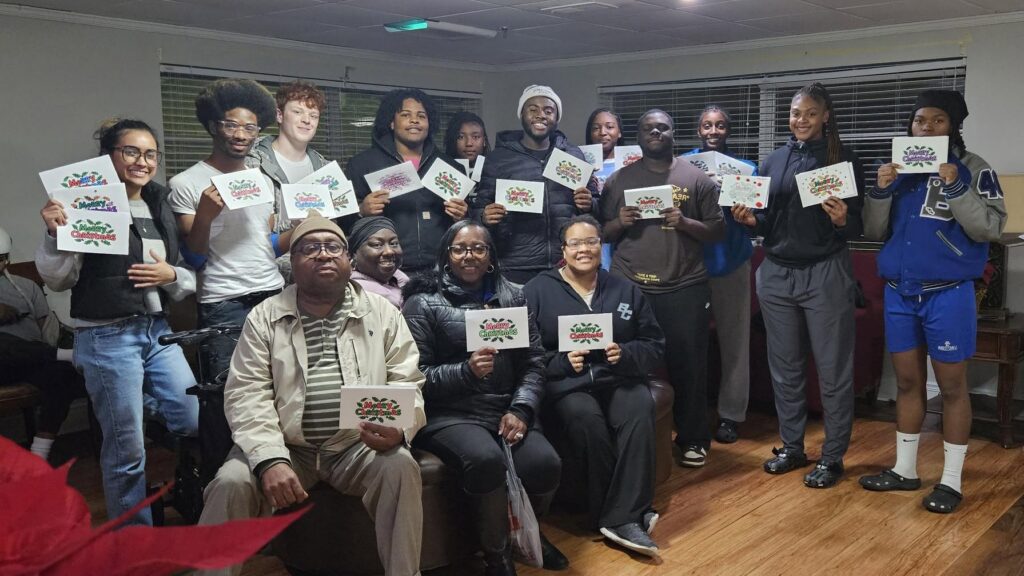
Burke County Family Connection strengthened communication and created more intentional virtual spaces, resulting in stronger partner participation and shared ownership of initiatives.
The Collaborative has placed greater emphasis on consistency, flexibility, and relationship-building—ensuring partners understand how their contributions connect to the larger mission.
“These efforts have reinforced that strong partnerships are the foundation of effective community impact,” said Carter. “The Self- Assessment process is a valuable tool that builds trust, improves collaboration, and helps partners put local strategies into action for children and families.”