From Resource Map to Community Lifeline in Berrien County
Print This Post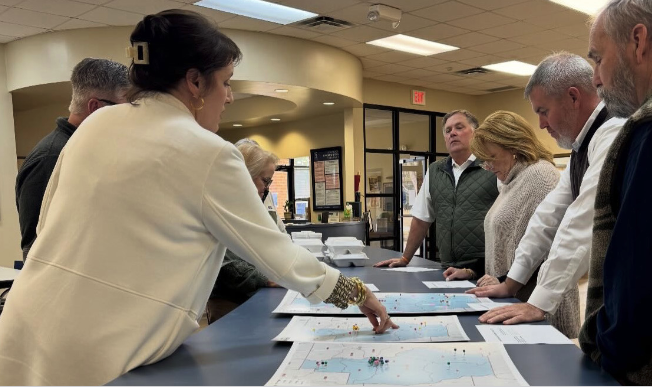
Nearly three in 10 children in rural Berrien County—28%—live in poverty. That reality is compounded by transportation barriers, food insecurity, limited access to health care, a shortage of affordable child care, and a lack of behavioral health services.
Family Connection/Communities In Schools of Berrien County leveraged Georgia KIDS COUNT data, ALICE reports, school attendance data, and family feedback to pinpoint where needs were greatest and align the Collaborative’s strategies. Census data revealed these challenges concentrated in specific areas.
A countywide Resource Mapping Project identified services by census tract, revealing where supports existed and where gaps remained—and strengthening the Collaborative’s ability to use local data for decision-making. Their self-assessment highlighted that while a wide range of services existed, families often didn’t know about them or struggled to navigate systems.
“We began hosting additional events, strengthening communication among agencies, and expanding our Berrien Family Resource Center’s role as a single point of entry for support,” said Sara Paulk, executive director of the Collaborative.“This work deepened rural outreach and shaped a vision for a ‘family resource center on wheels.’ Families now connect more easily with resources, and partner organizations report stronger coordination and fewer duplicated efforts.”
The Resource Mapping Project sparked new questions about how families access care, including whether some travel outside the county for services unavailable locally. “That insight reinforced the importance of understanding not only what resources exist, but how families actually navigate them,” said Paulk.
The project has continued to shape strategic decision-making and community planning, serving as a model for using local data to drive more intentional investment in children and families.
Hurricane Helene in 2024 left Berrien County facing extended power outages, food insecurity, property damage, and widespread disruption to work, school, and child care. Coordinated response structures at the Berrien Family Resource Center and established strong partnerships allowed the Collaborative to move immediately into coordinated action rather than building systems during the crisis.
Within hours, needs were assessed and resources mobilized across schools, DFCS, churches, the Chamber of Commerce, and other community partners. Volunteers contributed more than 1,000 hours distributing food, water, and supplies over two weeks. An online intake system and QR code enabled real-time assessment and connected more than 800 families to direct support and follow-up services.
As the response unfolded, one lesson became clear,” said Paulk. “Families already knew and trusted the Family Resource Center, and partners knew where to turn. That trust made coordinated action possible.”
Partners adapted existing community assets to meet emerging needs, including converting Little Free Libraries into emergency access points for food and essential supplies. The experience reinforced that preparedness is not only about supplies. It’s about relationships, communication systems, and cross-sector coordination built long before a crisis occurs.
“The Berrien Family Resource Center was intentionally designed around three core principles: relationships, accessibility, and collaboration,” Paulk said. “Families often face multiple, interconnected challenges, yet systems often require them to navigate services independently. The goal was to create a centralized, welcoming place where families could access support, build trusted relationships, and connect to resources that strengthen stability.”
Families can access food, clothing, diapers, hygiene items, school supplies, literacy resources, parenting support, referrals, and connections to partner organizations—all in one place. Staff take time to listen and understand each family’s story.
“We believe every family has assets and resilience, and our role is to build on those strengths while helping remove barriers,” said Paulk. Data from ALICE and Georgia KIDS COUNT continues to help the Collaborative understand the scale and concentration of needs across the county.
“Trust is what makes the center effective,” she said. “Families know they will be welcomed without judgment, treated with dignity, and connected to meaningful support. That trust opens the door to deeper engagement in services that strengthen long-term stability. It also positioned the center as a trusted hub for partners and local government to direct families in crisis during Hurricane Helene.”
Through monthly Collaborative meetings and ongoing partnerships, agencies share information, identify gaps, align services, and reduce duplication so families receive support more efficiently.
One family came to the center during a sudden financial crisis seeking food assistance. They received food, school supplies, clothing, and referrals for autism screening. Over time, staff built a relationship with the family and connected them to long-term supports that stabilized their situation.
“The parent later shared that having a trusted place to turn during a difficult season gave them confidence to move forward,” said Paulk. “That’s our work: not simply meeting needs, but building the trust, relationships, and coordinated systems that make stability possible.”
Family Connection/Communities In Schools of Berrien County is a member of the Georgia Family Connection statewide network, working alongside children, families, and communities across the state to craft local solutions that maximize resources and make systems more effective and efficient.
To learn more about Family Connection/Communities In Schools of Berrien County’s efforts, visit berrien.gafcp.org or contact Sara Paulk at 229-686-6576 or spaulk@fccisberrien.org.