Gathering Meaningful Input to Help Families Thrive Through Community Assessments
Print This Post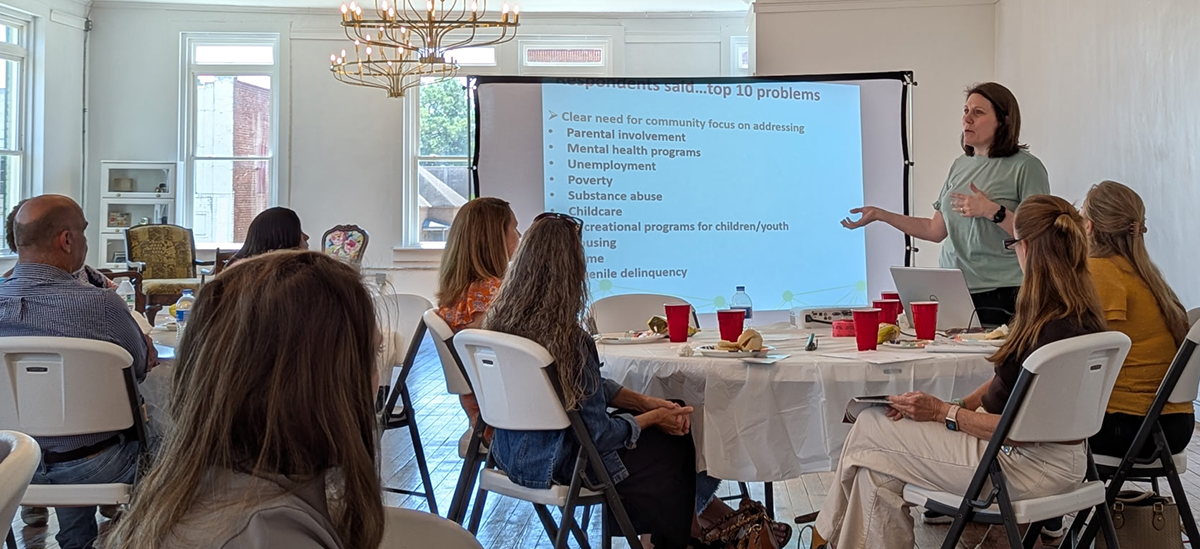
A Georgia Family Connection Community Assessment is a structured process used to identify and analyze a community’s strengths, needs, and resources. It provides a thorough understanding of population demographics, social and economic conditions, health status, and the availability and effectiveness of community services.
This assessment allows local Collaboratives to collect primary, real-time data directly from families and partners they serve, which works in tandem with secondary data sources from Georgia Family Connection Partnership like Georgia Profiles and Birth to 21 Snapshots. That’s why GaFCP encourages all Collaboratives to conduct a Community Assessment every three to five years, though timing may vary based on local goals, changing conditions, or annual planning needs.
A Community Assessment:
- builds shared ownership across residents, service providers, public officials, and community leaders;
- identifies service gaps and system capacity challenges;
- strengthens annual planning; and
- ensures services and initiatives are aligned with community-identified priorities.
This assessment provides GaFCP with consistent, statewide insight into local conditions and supports data-informed investment and resource allocation. It also strengthens accountability and transparency across our statewide network.
A Community Assessment is a foundation for action. When community members are meaningfully engaged through surveys, focus groups, and interviews, the process increases trust, improves service alignment, and positions a Collaborative to respond strategically to evolving community needs.
Broad, inclusive participation ensures the findings reflect the full community and strengthens a Collaborative’s ability to act on what it learns.
Assessing Communities in Mitchell County
Rising mental health concerns, especially among children and youth, combined with limited parenting supports and employment opportunities, prompted Mitchell County Children and Youth, a Georgia Family Connection Collaborative, to initiate a comprehensive community assessment in FY25.
Mitchell County Children and Youth Executive Director Jessica Jennings convened the Collaborative and its board to form a Community Assessment Workgroup, which played a key role in planning and implementing the assessment, supporting data analysis, and drafting the report. Mikayla Charles of GaFCP’s Evaluation and Results Accountability (ERA) Team assisted in the process.
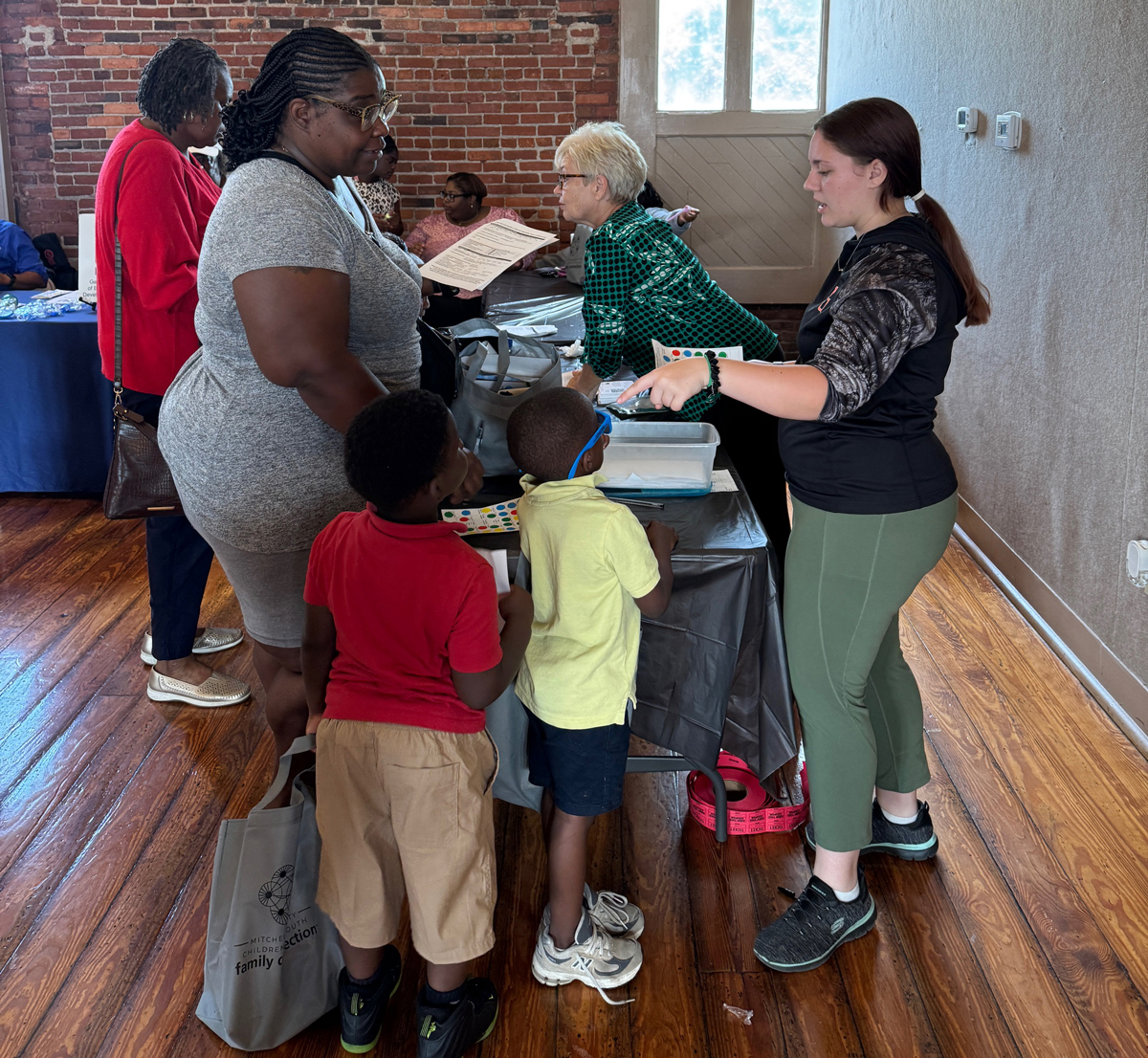
The workgroup defined key questions and collaborated with Charles to ensure the data collection process followed evaluation best practices. They reviewed county data and conducted surveys, focus groups, and interviews with more than 200 community members.
The stories and input collected through face-to-face discussions allowed the Collaborative to examine its strategy and better respond to what mattered most to the community.
“We know what the data says. We’ve reviewed our students’ test scores, and we know our kids are missing school,” said Jennings. “But we didn’t know how the community felt—their perceptions and what they saw as community priorities.”
The Collaborative learned from an emergency room nurse that overutilizing visits to the ER for mental health challenges was causing more traumatic experiences for children and youth, further contributing to mental health issues.
“We looked at our increasing death by suicide rate,” said Jennings. “There were three deaths by suicide in 2024, and one in the age range of 1 to 17. On the surface that may not appear to be a big number—but in a small county like ours, it is.”
The Collaborative implemented a mental health strategy, establishing a subgroup out of its existing GaFCP Community Partnership for Supporting Youth Cohort strategy team. Mental health partners were invited to the Collaborative table and parental involvement increased.
“When we began our assessment, our main takeaway from the data was that lack of parental involvement was a primary issue,” said Jennings. “However, through our focus groups and interviews with community members, we learned from parent feedback what they felt they needed in order for them to be more active in school and community events.”
Parents shared that they often weren’t informed of meeting dates in advance and observed bullying among both adults and students. The Collaborative also learned that families didn’t always know how to access resources.
“Hearing directly from families shaped our response and guided us to create opportunities that truly meet them where they are,” said Jennings, who recently provided transportation for a parent to a family event. “We included a community education component for parents to our strategic plan, and we increased access by offering lunch and learns and other sessions at varied days and times, so parents who work full time can participate and gather resources they need.”
This Community Assessment process ensured the Collaborative gathered meaningful input and built evaluation capacity to collect and use these data for planning, strategy refinement, and decision-making.
“We’re proud of this work,” said Jennings. “We’re constantly looking at more ways to talk, ask, track—searching for common barriers.”
Reach out to Valerie Hutcherson of GaFCP’s ERA Team at vrhutcherson@bellsouth.net to learn more about conducting a Community Assessment.
Contact:
Bill Valladares
GaFCP Communications Director
404-739-0043
william@gafcp.org
Follow us on Twitter: @gafcpnews
Connect with us on Facebook.